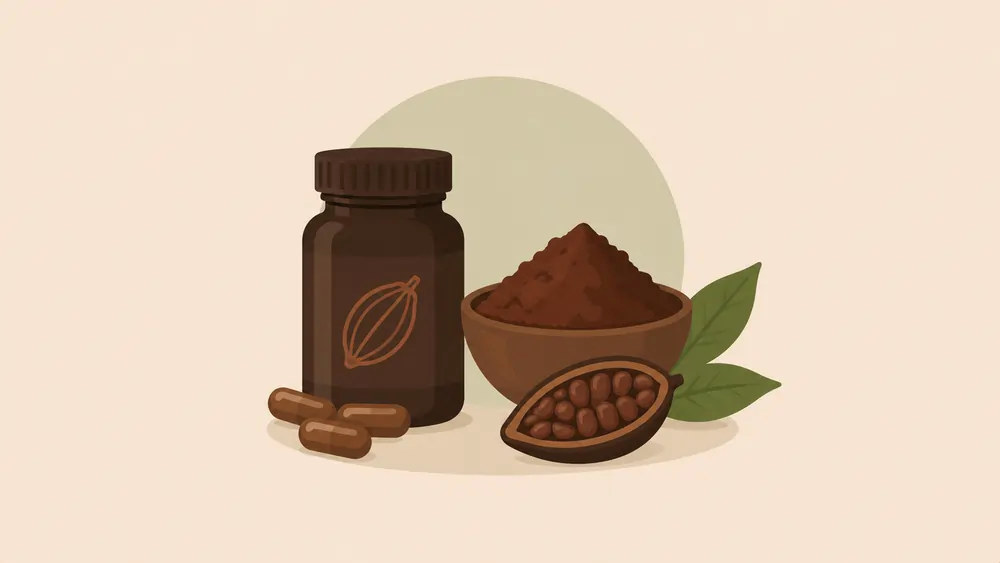
Cacao capsules vs cacao powder is a practical choice for people who like the idea of cacao but do not always want the taste, prep time, bitterness, or kitchen cleanup. Cacao powder works well for drinks, smoothies, baking, and recipes. Cacao capsules work better for people who want a simpler routine, no sugar, less flavor exposure, and a more consistent serving style.
The confusion is understandable. Cacao can appear as capsules, powder, nibs, cocoa flavanol capsules, chocolate, tinctures, hot cocoa mixes, and functional blends. These formats are not the same. Secrets Of The Tribe approaches this topic as a routine and label-reading guide: the best cacao format is the one that fits your taste, sugar preference, travel needs, serving consistency, and label clarity.
This article does not provide medical advice. Cacao and cocoa supplements are not intended to diagnose, treat, cure, or prevent any disease. Cacao products may contain naturally occurring caffeine, theobromine, and cocoa flavanols. If you are pregnant or breastfeeding, sensitive to caffeine, taking medication, managing a diagnosed condition, or buying for a child or teen, ask a qualified healthcare professional before using concentrated cacao supplements.
Cacao Capsules vs Cacao Powder: Quick Answer
Cacao capsules are usually easier for people who want no taste, no mixing, simple travel use, and more consistent serving. Cacao powder is better for people who enjoy chocolate-like flavor, smoothies, hot drinks, baking, and flexible recipes.
If you dislike bitter cacao flavor, capsules may be easier. If you enjoy food preparation and want cacao as part of meals or drinks, powder may fit better.
Neither format is automatically better. The smarter choice depends on how you actually use products day to day.
Quick Comparison: Capsules, Powder, Nibs, Flavanol Capsules, and Chocolate
| Format | Best For | Routine Fit | Watch-Out |
|---|---|---|---|
| Cacao capsules | No taste and simple serving | With water, often with food | Less flexible for recipes |
| Cacao powder | Drinks, smoothies, recipes | Kitchen-based routine | Bitter taste and prep time |
| Cacao nibs | Crunchy topping or snack-style use | Yogurt, oatmeal, trail mixes | Strong bitter flavor and texture |
| Cocoa flavanol capsules | Measured flavanol-focused labels | Supplement routine | Check flavanol amount and warnings |
| Chocolate | Taste and enjoyment | Dessert or snack routine | Added sugar, fat, calories, and variable flavanols |
When Do Cacao Capsules Make More Sense?
Cacao capsules make more sense when convenience is the priority. You do not need to measure powder, blend a drink, heat milk, clean a shaker, or tolerate bitter flavor. You take the serving listed on the label with water.
Capsules also work well for travel. They are easier to pack than powder and less messy in a backpack, gym bag, or work drawer. They also reduce the chance of using too much because you are not scooping by eye.
The trade-off is flexibility. Capsules do not give you a rich cacao drink, recipe ingredient, or dessert-like ritual. They are practical, not sensory.
When Does Cacao Powder Make More Sense?
Cacao powder makes more sense when you want cacao as a food ingredient. It works in smoothies, oatmeal, yogurt bowls, energy bites, hot drinks, baking, and homemade mixes.
Powder also gives you more control over taste. You can make it stronger, lighter, sweeter, creamier, or more bitter depending on what you mix it with.
The downside is friction. Powder needs measuring, mixing, and cleanup. It can clump in cold liquids. It can taste bitter without sweeteners or creamy ingredients. If that friction makes you skip it, capsules may be easier.
Which Format Has Less Taste?
Cacao capsules usually have less taste because the capsule shell keeps the cacao away from your tongue. This helps people who want cacao in their routine but dislike bitterness.
Cacao powder has a direct flavor experience. It can taste chocolate-like, earthy, roasted, bitter, fruity, or astringent depending on the product and processing style.
Cacao nibs usually taste even more intense than powder because they are crunchy and less diluted. Chocolate usually tastes easiest, but it often includes added sugar, fat, and other ingredients.
Which Format Is Better for Sugar Control?
Cacao capsules and unsweetened cacao powder can both be low-sugar options, depending on the label. The main difference is how people use them.
Capsules are usually taken with water and do not need sweeteners. Powder often gets mixed with sweetened milk, honey, sugar, syrups, flavored protein powders, or chocolate-style drinks. Those additions can change the nutrition profile quickly.
If you want cacao without turning it into a sweet drink, capsules are simpler. If you enjoy making drinks and can control the recipe, unsweetened powder can still work well.
Which Format Has Better Serving Consistency?
Capsules usually offer better serving consistency because the amount is pre-portioned. A label might list cacao powder, cacao extract, cocoa flavanols, or another cacao ingredient per serving.
Powder can also be consistent if you measure carefully with a scale or standardized scoop. But casual spoonfuls vary. A heaping spoon, level spoon, tablespoon, and scoop can produce different amounts.
If consistency matters most, capsules win. If recipe flexibility matters most, powder wins.
Cacao Powder vs Cocoa Powder: Are They the Same?
Cacao powder and cocoa powder are related but not always identical in how products are processed or marketed. “Cacao” often refers to less processed or more minimally processed cacao bean products. “Cocoa” often refers to roasted or processed products, but labels vary.
For practical buyers, the label matters more than the word alone. Check whether the powder is unsweetened, Dutch-processed, alkalized, raw, organic, flavanol-focused, or blended with sugar and other ingredients.
Alkalized or Dutch-processed cocoa can taste smoother and less acidic, but processing may affect flavanol levels. If flavanol content matters to you, look for a product that states flavanol amount rather than assuming based on the word cacao or cocoa.
What About Cocoa Flavanol Capsules?
Cocoa flavanol capsules are a more specific supplement category. Instead of simply listing cacao powder, they may list cocoa extract or cocoa flavanols per serving.
This can make comparison easier if the label is clear. A flavanol amount gives more information than a vague “cacao blend” statement.
However, flavanol capsules still require caution. Check serving size, caffeine or theobromine information if listed, other ingredients, and warnings. More flavanols do not automatically mean the product is right for every person.
What About Cacao Nibs?
Cacao nibs are small pieces of crushed cacao bean. They are crunchy, bitter, and intense. People often add them to oatmeal, yogurt, smoothie bowls, granola, or trail mix.
Nibs are more food-like than capsules, but less smooth than powder. They are convenient as a topping but not ideal for people who dislike bitterness or hard texture.
If your goal is easy daily use, capsules are simpler. If your goal is a crunchy cacao food experience, nibs may fit better.
What About Chocolate?
Chocolate is the most enjoyable cacao format for many people, but it is not the same as cacao capsules or unsweetened powder. Chocolate often includes sugar, cocoa butter, milk ingredients, emulsifiers, flavorings, or other additions.
Dark chocolate may contain more cacao than milk chocolate, but flavanol levels can still vary widely. Processing, cacao percentage, sourcing, and recipe all matter.
If your goal is taste, chocolate may fit. If your goal is a simple no-sugar cacao routine, capsules or unsweetened powder are easier to control.
What to Check on a Cacao Capsule Label
A cacao capsule label should make the ingredient type clear. Look for terms such as cacao powder, cacao extract, cocoa extract, cocoa flavanols, Theobroma cacao, serving size, amount per serving, and other ingredients.
The botanical name Theobroma cacao helps confirm the source plant. The ingredient type tells you whether you are getting powder, extract, or flavanol-standardized material.
Secrets Of The Tribe takes a conservative editorial stance here: a good cacao capsule label should not rely on chocolate nostalgia or vague energy language. It should clearly show what is inside and how to use it.
What to Check on a Cacao Powder Label
A cacao powder label should show whether the product is unsweetened, alkalized, Dutch-processed, raw, organic, or blended. It should also list serving size, calories, carbohydrates, fiber, added sugar, and other ingredients if present.
If the powder is marketed for flavanols, look for a stated flavanol amount. Do not assume all cacao powders contain similar flavanol levels.
Also check quality information. Cocoa and cacao products can vary in heavy metal content, especially cadmium and lead. For frequent use, third-party testing or transparent quality information is a useful signal.
Heavy Metals, Caffeine, and Theobromine: What to Know
Cacao products may contain naturally occurring caffeine and theobromine. These compounds can matter for people who are sensitive to stimulants or who use cacao later in the day.
Cocoa and cacao products can also vary in heavy metal levels, especially cadmium and lead. This does not mean every cacao product is unsafe, but it does mean frequent users should care about sourcing and testing.
Children, teens, pregnant people, and people using cacao daily should be especially mindful of serving size and quality information. A clean label is useful, but testing transparency is better.
Cacao Capsules vs Cacao Powder: Label Comparison
| Label Question | Cacao Capsules | Cacao Powder |
|---|---|---|
| What is the main serving unit? | Capsules per serving | Grams, tablespoons, or scoops |
| Does it have taste? | Usually minimal | Yes, often bitter and chocolate-like |
| Does it need preparation? | No mixing or cooking | Needs mixing, blending, or cooking |
| Is sugar usually needed? | No | Often added by users for taste |
| Is serving consistent? | Usually more consistent | Depends on measuring method |
| What quality details matter? | Ingredient type, flavanols, testing | Processing, flavanols, heavy metal testing |
Cacao Format Checklist
Use this checklist before choosing cacao capsules, cacao powder, cocoa flavanol capsules, nibs, or chocolate. The goal is to match the format to your real routine while avoiding taste surprises, sugar creep, and unclear labels.
Choose Your Main Use Case
Pick capsules for convenience, powder for recipes, nibs for crunch, flavanol capsules for measured labels, or chocolate for taste.
Check the Ingredient Type
Look for cacao powder, cocoa powder, cocoa extract, cacao extract, cocoa flavanols, or Theobroma cacao. These terms are not always interchangeable.
Review Serving Size
Capsules use capsule counts. Powder uses grams, tablespoons, or scoops. Do not compare labels without serving size.
Watch Added Sugar
Unsweetened powder and capsules can be low-sugar, but drinks and chocolate products often add sweeteners.
Consider Caffeine Sensitivity
Cacao may contain caffeine and theobromine. Be cautious if you are sensitive to stimulants or use cacao late in the day.
Look for Flavanol Information
If flavanols matter to you, choose labels that state flavanol amount instead of relying on vague cacao wording.
Check Testing Transparency
For frequent use, look for third-party testing or quality information related to heavy metals such as cadmium and lead.
Avoid Medical Expectations
Do not choose cacao capsules or powder to self-manage symptoms or diagnosed conditions. Use the format guide for routine fit.
Common Mistakes to Avoid
Assuming Powder Is Always More Natural
Cacao powder can be simple, but quality depends on sourcing, processing, testing, and the full label.
Thinking Capsules Are Always Weaker
Capsules are not automatically weaker. They may contain powder, extract, or flavanol-focused material. Read the ingredient type.
Ignoring Sugar in Drinks
Cacao powder may start unsweetened, but recipes can add sugar quickly through milk, syrups, sweeteners, or chocolate blends.
Comparing Cocoa Flavanols Without Serving Size
Flavanol numbers need serving context. Check amount per serving, not just front-label claims.
Forgetting Heavy Metal Testing
Cacao products can vary in cadmium and lead levels. Frequent users should care about testing transparency.
FAQ about Cacao Capsules vs Cacao Powder
Are cacao capsules better than cacao powder?
Not always. Capsules are better for convenience and no taste, while powder is better for drinks, smoothies, baking, and recipes.
Which cacao format has the least taste?
Cacao capsules usually have the least taste because the capsule shell keeps cacao away from your tongue.
Is cacao powder bitter?
Yes, unsweetened cacao powder can taste bitter, earthy, roasted, and chocolate-like.
Do cacao capsules have sugar?
Many cacao capsules have little or no sugar, but you must check the Supplement Facts and other ingredients.
Is cacao powder the same as cocoa powder?
They are related, but labels vary by processing, alkalization, roasting, and marketing language. Read the product details.
What are cocoa flavanol capsules?
They are capsules that usually focus on measured cocoa flavanol content rather than general cacao powder.
Are cacao nibs easier than cacao powder?
Nibs are easier as a topping, but they are crunchy and bitter. Powder is better for drinks and recipes.
Does cacao contain caffeine?
Yes, cacao can contain naturally occurring caffeine and theobromine, so sensitive users should check serving size and timing.
Should I worry about heavy metals in cacao?
Cacao products can vary in cadmium and lead levels. Frequent users should look for testing transparency and avoid excessive intake.
Glossary
Cacao Capsules
A supplement format that contains cacao powder, cacao extract, or cocoa flavanol material inside capsules.
Cacao Powder
A powdered cacao product used in drinks, smoothies, baking, and recipes.
Cocoa Powder
A related powder made from cacao beans, often processed or roasted depending on the product.
Theobroma cacao
The botanical name for the cacao tree.
Cocoa Flavanols
Plant compounds in cocoa and cacao products that may be listed on specialized labels.
Cacao Nibs
Small pieces of crushed cacao bean with a crunchy texture and bitter flavor.
Dutch-Processed Cocoa
Cocoa treated with alkali to change flavor, color, and acidity.
Theobromine
A naturally occurring cacao compound related to caffeine in its stimulant category.
Serving Size
The amount listed on the label for one use, such as capsules, grams, tablespoons, or scoops.
Third-Party Testing
Testing by an outside lab to check quality factors such as contaminants, ingredient identity, or compound levels.
Conclusion
Cacao capsules vs cacao powder comes down to routine fit: capsules are easiest for no taste, travel, and serving consistency, while powder is better for drinks and recipes. Read the label for ingredient type, sugar, flavanols, caffeine-related compounds, serving size, and testing transparency.
Sources
Dietary supplement label requirements including Supplement Facts and other ingredients, U.S. Food and Drug Administration — fda.gov/food/information-consumers-using-dietary-supplements/questions-and-answers-dietary-supplements
Cocoa powder and supplement testing with flavanol variation and cadmium/lead concerns, ConsumerLab — consumerlab.com/reviews/cocoa-powders-and-chocolates-sources-of-flavanols/cocoa-flavanols
FDA qualified health claim scope for cocoa flavanols in high-flavanol cocoa powder and limitations for regular cocoa and chocolate, U.S. Food and Drug Administration — fda.gov/food/hfp-constituent-updates/fda-announces-qualified-health-claim-cocoa-flavanols-high-flavanol-cocoa-powder-and-reduced-risk
Cocoa product heavy metal analysis including lead, cadmium, and arsenic concerns, PubMed Central — pmc.ncbi.nlm.nih.gov/articles/PMC11321977
Cocoa powder cadmium discussion and product variation, ConsumerLab — consumerlab.com/answers/why-is-there-so-much-cadmium-in-cocoa-powders-but-not-in-dark-chocolate/cadmium-in-dark-chocolate
Caffeine and theobromine in foods and dietary supplements, USDA Agricultural Research Service — ars.usda.gov/ARSUserFiles/80400525/articles/eb06_supp.pdf
Cacao bean and cocoa processing overview, Encyclopaedia Britannica — britannica.com/plant/cacao